
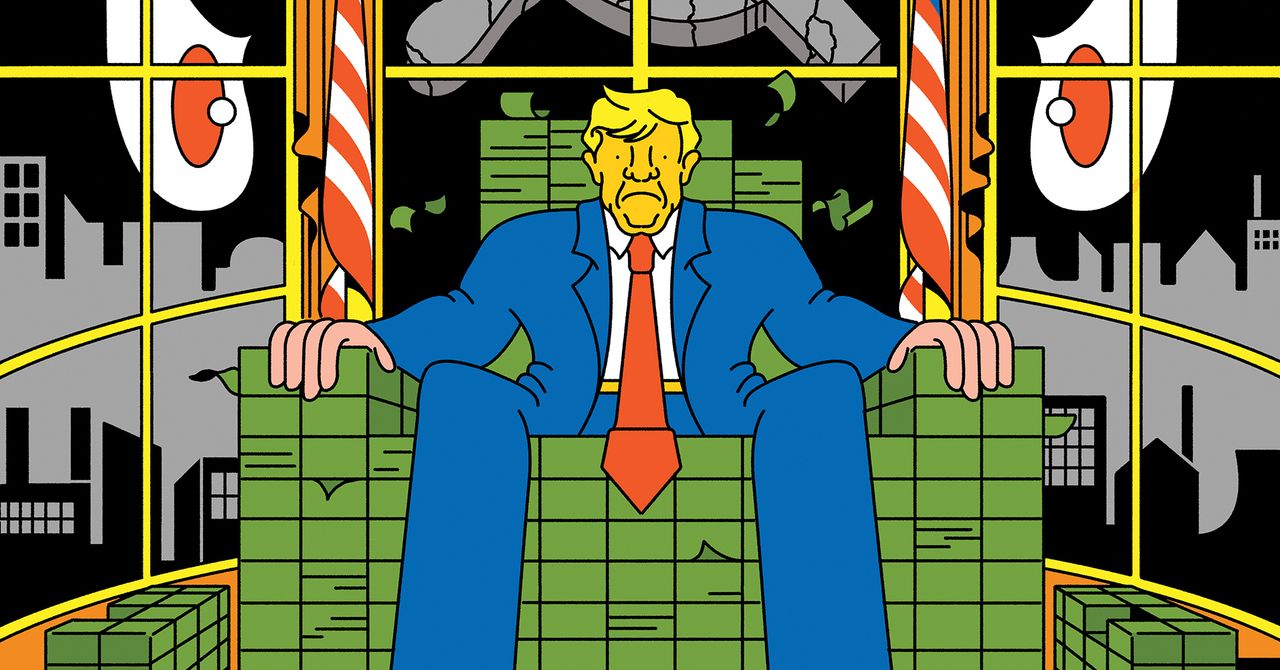

In 2025, American and world leaders were preoccupied with wars in the Middle East. Most dramatically, first Israel and the United States bombed Iran’s nuclear facilities. Some commentators feared that President Trump’s decision to bomb Iran would drag the United States into the “forever wars” in the Middle East that presidential candidate Trump had pledged to avoid. The tragic war in Gaza had become a humanitarian disaster. After years of promising to reduce engagement with the region from Democratic and Republican presidents alike, it appeared that the US was being dragged back into Middle East once again.
I hope that’s not the case. Instead, in 2026, President Trump, his administration, the US Congress, and the American people more generally must realize that the real challenges to the American national interests, the free world, and global order more generally come not from the Middle East but from the autocratic China and Russia. The three-decade honeymoon from great power politics after the collapse of the Soviet Union and the end of the Cold War is over. For the United States to succeed in this new era of great power competition, US strategists must first accurately diagnose the threat and then devise and implement effective prescriptions.
The oversimplified assessment is that we have entered a new Cold War with Xi’s China and his sidekick, Russian leader Vladimir Putin. To be sure, there are some parallels between our current era of great power competition and the Cold War. The balance of power in the world today is dominated by two great powers, the United States and China, much like the United States and the Soviet Union dominated the world during the Cold War. Second, like the contest between communism and capitalism during the last century, there is an ideological conflict between the great powers today. The United States is a democracy. China and Russia are autocracies. Third, at least until the second Trump era, all three of these great powers have sought to propagate and expand their influence globally. That too was the case during the last Cold War.
At the same time, there are also some significant differences. Superimposing the Cold War metaphor to explain everything regarding the US-China rivalry today distorts as much as it illuminates.
First, while the world is dominated by two great powers, the United States remains more powerful than China on many dimensions of power—military, economic, ideological—and especially so when allies are added to the equation. Also different from the Cold War, several mid-level powers have emerged in the global system—Brazil, India, Indonesia, Saudi Arabia, and South Africa, among others—that are not willing to join exclusively the American bloc or the Chinese bloc.
Second, while the ideological dimension of great power competition is real, it is not as intense as the Cold War. The Soviets aimed to spread communism worldwide, including in Europe and the United States. They were willing to deploy the Red Army, provide military and economic assistance, overthrow regimes, and fight proxy wars with the United States to achieve that aim. So far, Xi Jinping and the Communist Party of China have not employed these same aggressive methods to export their model of governance or construct an alternative world order. Putin is much more aggressive in propagating his ideology of illiberal nationalism and seeking to destroy the liberal international order. Thankfully, however, Russia does not have the capabilities of China to succeed in these revisionist aims.
Services Marketplace – Listings, Bookings & Reviews