
I test earbuds for a living, and throughout 2025 I’ve been watching with glee as a new trend takes the affordable earbud market by storm. In fact, I reckon it’ll take such a hold through 2026 that by the end of the year, our list of the best wireless earbuds will be dominated by budget options. Would you ditch your AirPods for a cut-price alternative?
This sea-change in the earbud market is only one of several headphone predictions I have for 2026, because constant changes to tech means shake-ups are expected for everything from the best headphones to open earbuds and everything in between.
I’ve been reviewing headphones for years, so here’s what I’m expecting in the new year, based on gadgets I’ve tested and trends I’ve seen over my years testing audio products.
What are the big releases?

Before I explore the big headphone trends of 2026, let’s quickly run through some of the big releases which will end up on your end-of-year wishlist. Don’t expect any AirPods Pro 4, and chances of new 5th-gen AirPods are low too, but there are plenty of other big releases.
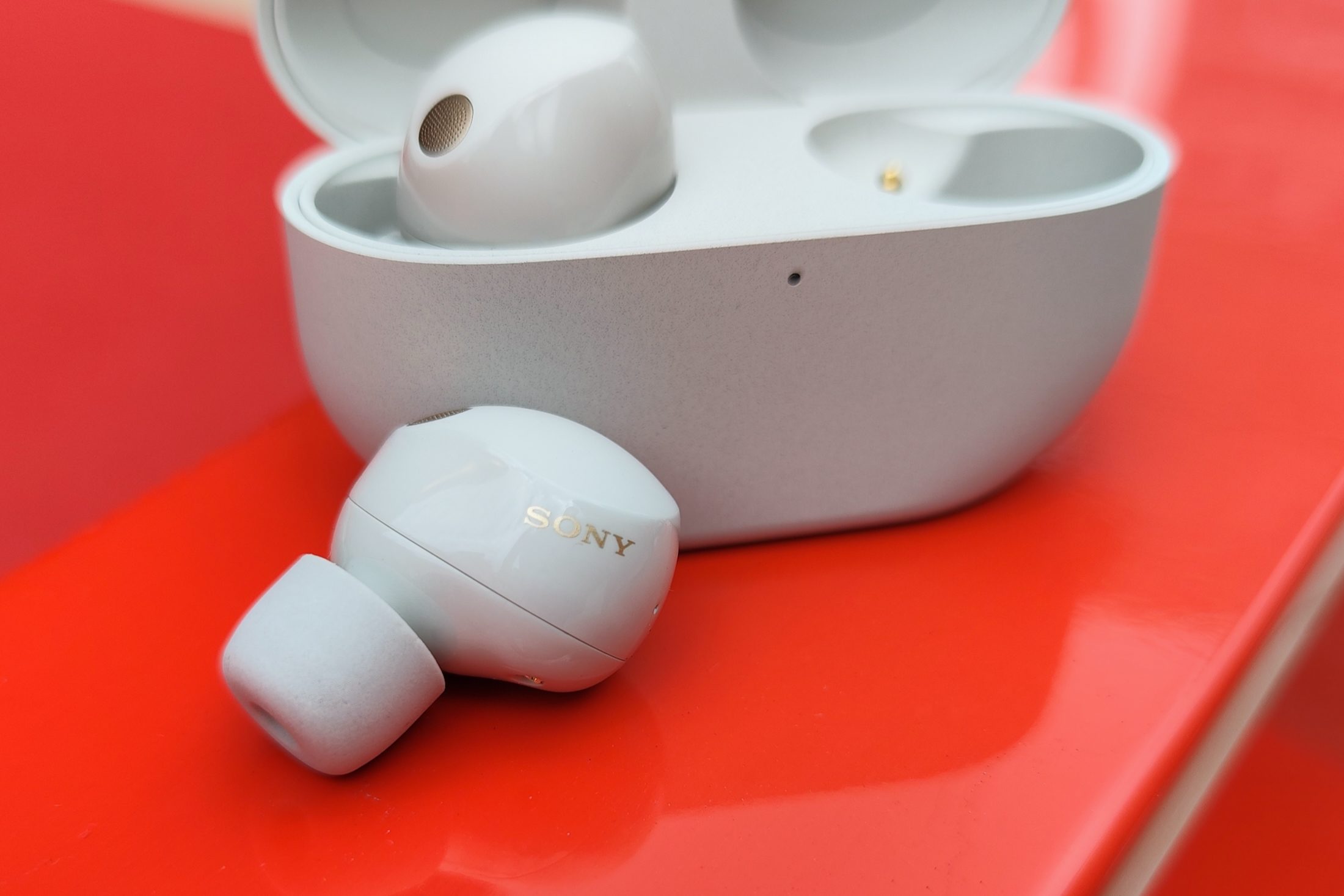
The Sony WF-1000XM6 and Samsung Galaxy Buds 4 Pro are expected to be some of the year’s premium earbuds, while the Sennheiser Momentum 5 and AirPods Max 2 are the headphones everyone is waiting for. None of these headphones are guaranteed to be released, but all are both hoped-for and, to varying degrees, likely.
Of course, we’ll also see countless new releases from smaller brands, as well as alternatives to the big-named options from loads of companies too.
A big year for cheap earbuds

If you’re a fan of the best budget headphones, then 2026 is bound to be a year where plenty of new releases tempt you. I’ve already talked with hyperbolic language in the introduction about how big this change could be, but I have really high hopes for it.
Through the latter half of 2025, more and more pairs of affordable earbuds to hit the market bore multiple drivers, like the Earfun Air Pro 4 Plus with two or the Soundpeats H3 with three. And I’m expecting this to hit overdrive in 2026.
What does this tech mean? To simplify, a driver is a small speaker for an earbud, and most budget options only have one which has to cover the entire audio spectrum like a jack of all trades but a master of none. Multiple drivers mean that each can be tuned to a specific area like bass or treble, giving you higher quality and better tuning whether you’re listening to something bassy or squealing guitar solos.
Dual- or triple-driver earbuds are nothing new, but it used to be rare to see affordable options. And with that changing in 2025, it’s clear that manufacturers are finding ways to offer multiple drivers while keeping costs low. As a result 2026 promises even more options, and the budget market will have discovered another way to compete with the top-end stalwarts.
In short, you soon won’t have to spend $300+ to get incredible-sounding earbuds. A mere $100 will be enough.
Big headphone changes will be under the hood

Beyond iterative updates like improved battery lives and slightly different drivers, I’m not expecting 2026’s over-ear headphones to bring any wildly-different hardware to what we saw in 2025. Any new flashy changes are expected to come under the hood, in the form of new features.
One of the anticipated additions is something we’ve seen in headphones for a few years, but it’s poised to become a breakout in 2026: spatial audio. This is a smart system which transforms your audio into a 3D sound space that you’re at the center of, like surround sound, except that surround sound tech only shifts music to the left or right. Spatial audio can make sounds appear to be coming from above and below too.
While it works for music, spatial audio is most popular for watching movies or playing games. With handheld tech becoming ever more popular for these tasks, spatial audio could be a big selling point in 2026 headphones. It’s still a little hit-and-miss, but ongoing tech advancements promise that ubiquitous and perfect spatial audio could be around the corner.
Elsewhere in the feature department, we’ll likely see more companies challenge Bose as the best brand for noise cancellation, with multiple brands reaching the ceiling of just how good ANC can be. After all, there’s only so much sound that can be cancelled before there’s none left to hear, and with Bose nearing that cap, budget brands will be hot on its heels.
Through 2025, audio listening tests became more commonplace. These are in-app functions which test how sensitive your ears are, and can create bespoke equalization mixes that fix any issues with your hearing. They’re legitimately fantastic tools, good for helping listeners appreciate their music in a new way and also for accessibility. While a good number of brands now have said features, we could see more companies release versions in 2026.
And what about any AI features? We could see some auto-ANC or audio-EQ features, but audio brands have largely stayed away from adding AI-powered tools into their earbuds (besides the ability to summon AI assistants on certain models). After all, AI lacks something that human sound engineers have: ears.
A return to wired headphones

One of the biggest audio tech earthquakes of 2025 was the roll-out of Spotify Lossless, letting subscribers to the world’s biggest streaming service enjoy incredibly high-resolution audio… in theory. In practice, the tech required to make the most of it means many wireless headphone users can’t quite make the most of it right now.
Because of the increased interest in high-fidelity music streaming, I wouldn’t be surprised to see a resurgence in wired headphones – not just cheap earbuds but over-ears which require a cable too. After all, cables convey a lot more information (and therefore musical fidelity) than wireless options can manage.
Lossless isn’t unique, with Tidal and Apple Music also having audiophile-friendly modes, but Spotify has such a large market share that its big feature could point to a sea change in what music fans expect. There’s always been a space for wired cans on the market, but these tend to be super-cheap or super-premium models, and perhaps a new segment will be carved out in the middle.
The renaissance of open earbuds

Another kind of headphone which exploded in popularity in 2025 were open earbuds, which are exercise earbuds that let in some sound so you can hear what’s going on around you to stay safe. They come in two designs: sports-hook style options like the Shokz OpenFit 2 and clipping models like the Bose Ultra Open.
However, and likely because of their being rather new, open earbuds are still prone to a few issues. Over the year, I tested countless options that fit poorly, buds which were hard to hear over surrounding sounds, and options which didn’t offer anywhere near the feature set of non-open alternatives.
These issues are slowly being solved by various brands though, and I expect 2026 to be the year where we see large quantities of tempting open options. With the form factor still largely the domain of smaller brands, we could also see releases from companies which have stayed away like Beats, Samsung and Sony (the latter’s LinkBuds are slightly models).
Once open earbuds become commonplace, I also imagine we’ll see more models designed for non-exercise users, as there are a few use cases which don’t involve running by busy roads: office communication, hearing public transport announcements and so on. But there’s no telling whether they’ll come in 2026, or later.
Services Marketplace – Listings, Bookings & Reviews