
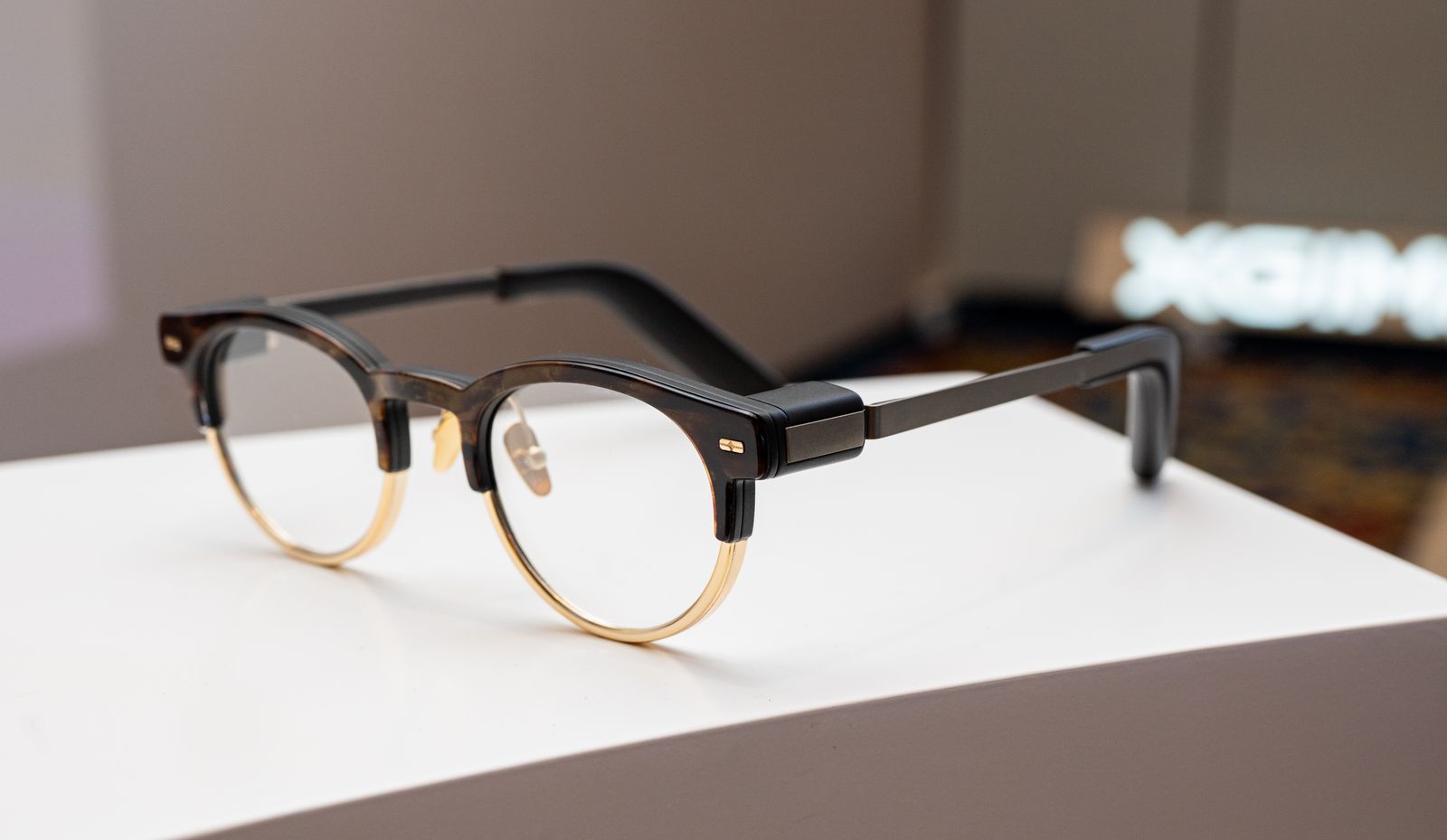

XGIMI makes projectors. Smart glasses with displays use projectors. So it makes sense that XGIMI now makes smart glasses. OK, technically, these smart glasses are from an incubated brand within XGIMI called MemoMind, which will likely be spun out as a new company in the future. But the glasses use XGIMI’s expertise in projectors to power the display technology.
MemoMind’s smart glasses include the Memo One and Memo Air Display. The Memo One is the flagship, with dual-eye displays, speakers, and microphones. The Memo Air Display is a monocular version, meaning there’s just one display on one of the lenses, and it doesn’t have speakers. That makes it a lot lighter at just 28.9 grams. There’s a third model that will only have microphones and will be significantly lighter, much like normal eyeglasses, but the company didn’t have much information on it at the moment. None of these glasses will have cameras, and a company representative cited battery life and privacy concerns as the reason why.

Photograph: Julian Chokkattu
While the arms are thick, they still look like normal glasses, and the whole thing feels eerily similar to the Even Realities G2, specifically the green text interface that appears on the projected display. I found the MemoMind One a little more accommodating for my wide face, though. MemoMind is trying to stand out with customization. There are eight frame styles and “interchangeable” temple designs, allowing you to mix up the look of the glasses. (Yes, you can get them in your prescription.)
When you look into the display, you’ll see a range of widgets that you can set via the companion app, from stocks and to-do lists to calendar entries. You can see notifications on the display alongside navigation instructions. Also in tow are a raft of features akin to what’s available on the Even Realities G2, from a teleprompter and real-time translation to a “Conversate” function that will silently offer up information about topics overheard by the AI assistant as you chat with people. The company says it’s using several large language models for these features, choosing the right one for the task, including those from OpenAI, Microsoft’s Azure, and Qwen.

Photograph: Julian Chokkattu
The Memo One is expected to cost $599, and preorders will open soon, though there’s no concrete release window just yet. Pricing isn’t set for the Memo Air Display yet.
Services Marketplace – Listings, Bookings & Reviews