

Alex Komoroske has always been at odds with Big Tech’s darker side. Though he cut his product-management teeth at Google and Stripe, he was never comfortable with the industry’s increasing prioritization of profits over people. Once during his time at Google, he extolled the societal benefits of a project only to be met with, “Oh Alex, you’d be a VP by now if you just stopped thinking through the implications of your actions.”
Since that 2010s episode, the revenues and valuations in tech have skyrocketed, as has the blithe disregard for users. “It’s disgusting to see the industry as it currently is,” Komoroske says.
Now, he’s doing something about it. Today, Komoroske and a loose group of concerned technologists are releasing The Resonant Computing Manifesto, an idealistic set of principles that attempts to recenter Silicon Valley around the values that have been lost in the scramble to hyperscale and maximize shareholder value. Komoroske and his coauthors are inviting anyone who, um, resonates with this jeremiad to sign it and proselytize those values in the products they create. Accompanying the manifesto is a shared doc of “the theses of resonant computing” where the community itself can provide input on shared principles. (Think: Martin Luther with a Google Workspace account.)
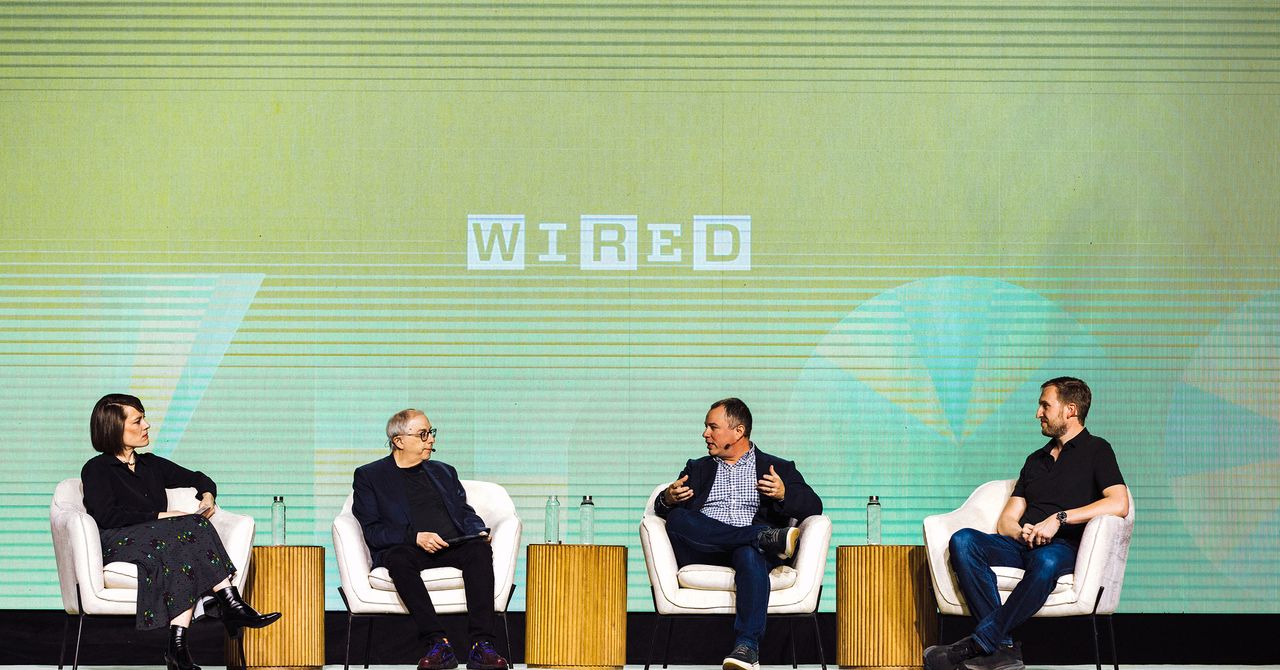
“There are a lot of us who remember a Silicon Valley, a world of innovation, where we felt good,” Techdirt founder Mike Masnick, a coauthor of the manifesto, said during WIRED’s Big Interview event on Thursday during a panel announcing the manifesto. “A lot of us have noticed that we don’t get that feeling anymore.”
Komoroske followed that up by saying that the manifesto is a response to cynicism, and that the values in it are ideals people in the Valley want to follow, even if it may not seem so on the surface.
The idea for the manifesto emerged from an informal “think tank,” as Komoroske calls it, of technologists concerned about the state of Silicon Valley. They started a group chat, met in person every couple of weeks, and about once a year would rent an Airbnb in the woods and game-plan the future.
“The second year we did it, we did generative AI—two weeks before ChatGPT came out,” says Komoroske. When he saw OpenAI’s chatbot soon afterwards, “I was like, Oh shit, LLMs are going to be as important as the printing press, electricity, the internet,” Komoroske says. He’s fascinated by the technology, but also understood then, and now, that LLMs could be incredibly destructive, simply because they’re in the “engagement-maxing machine” of the internet.
By 2025, it was clear to Komoroske and his cohort that Big Tech had strayed far from its early idealistic principles. As Silicon Valley began to align itself more strongly with political interests, the idea emerged within the group to lay out a different course, and a casual suggestion led to a process where some in the group began drafting what became today’s manifesto. They chose the word “resonant” to describe their vision mainly because of its positive connotations. As the document explains, “It’s the experience of encountering something that speaks to our deeper values.”
Services Marketplace – Listings, Bookings & Reviews