
OpenAI has given software developers a new desktop toy, and judging by the early reactions, it might feel like someone finally handed coders the Swiss Army knife they’ve been dreaming about or the kind of gadget that makes them wonder if they’re working with a robot coworker now.
The company rolled out the Codex app for macOS, a focused interface for managing AI coding agents, designed to let developers do more than just “generate a few lines of code.” Instead, Codex can juggle multiple tasks in parallel, run background workflows, and act on instructions that span hours or even days.
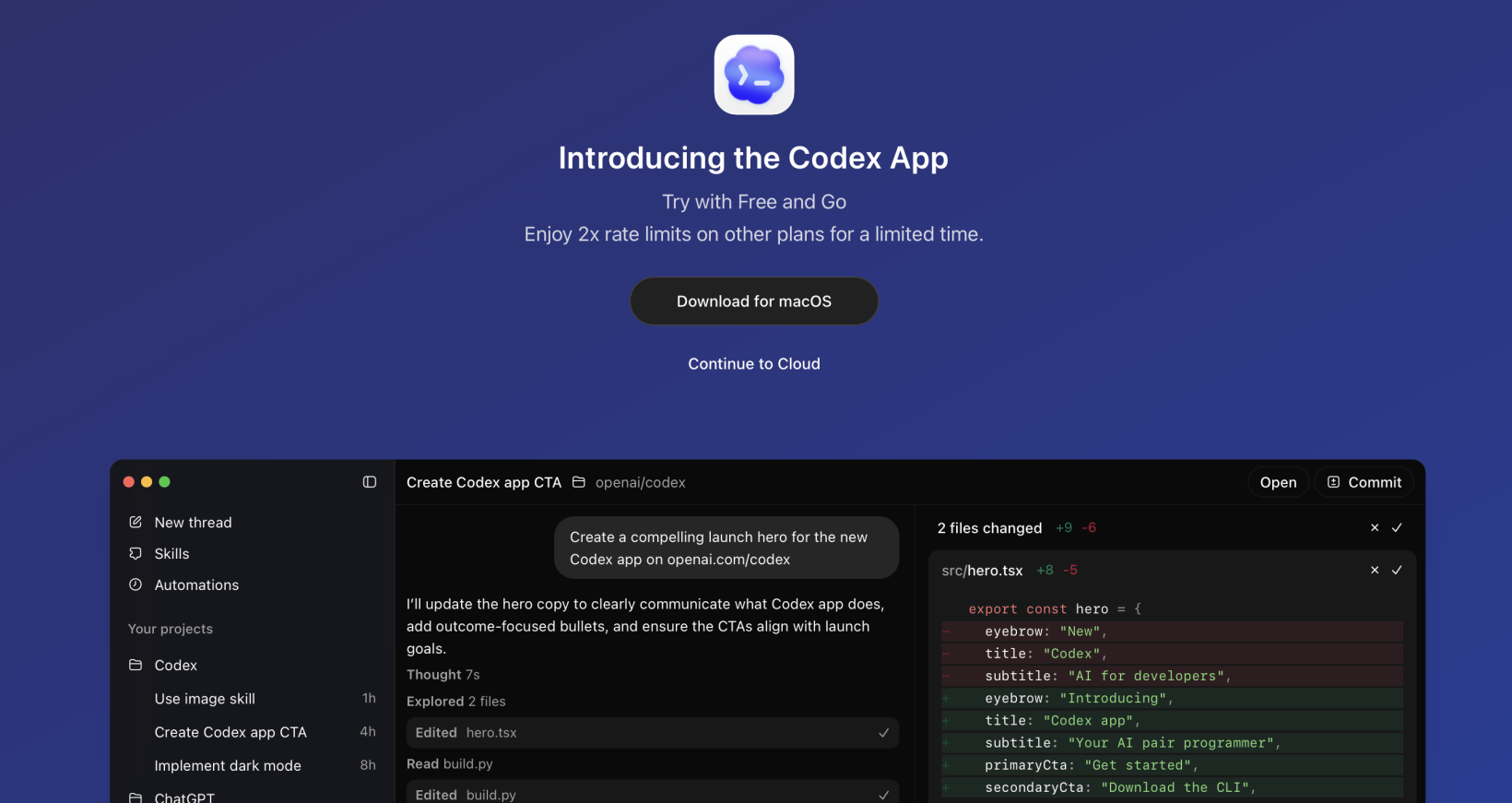
Image: My personal archive

The 💜 of EU tech
The latest rumblings from the EU tech scene, a story from our wise ol’ founder Boris, and some questionable AI art. It’s free, every week, in your inbox. Sign up now!
At its core, the new app is a response to a shift that’s been quietly happening for the past year: AI isn’t just helping write short snippets anymore. It’s taking on whole coding projects, running tests, dealing with pull requests, and even undertaking the kind of repetitive maintenance tasks that make developers groan.
Containers, threads, isolated worktrees, and integrated Git tools support all of this seamlessly within the app, so engineers don’t need to jump between terminals, IDEs, and cloud consoles just to keep a fleet of AI agents moving forward.
OpenAI’s own announcement makes this shift clear: existing tools were built for real-time interaction or single tasks, but today’s coding workflows are multifaceted and sprawling. Instead of coaxing a model to generate code line by line, the Codex app lets you orchestrate agents that work independently on different parts of a codebase.
Each agent runs in its own thread and its own worktree, which means you can explore multiple ideas without fear of one bot overwriting another’s progress. If you want Codex to review diffs, make comments inline, or even open suggested changes in your local editor, it can. If you want it to run in the background while you sleep, it can do that too.
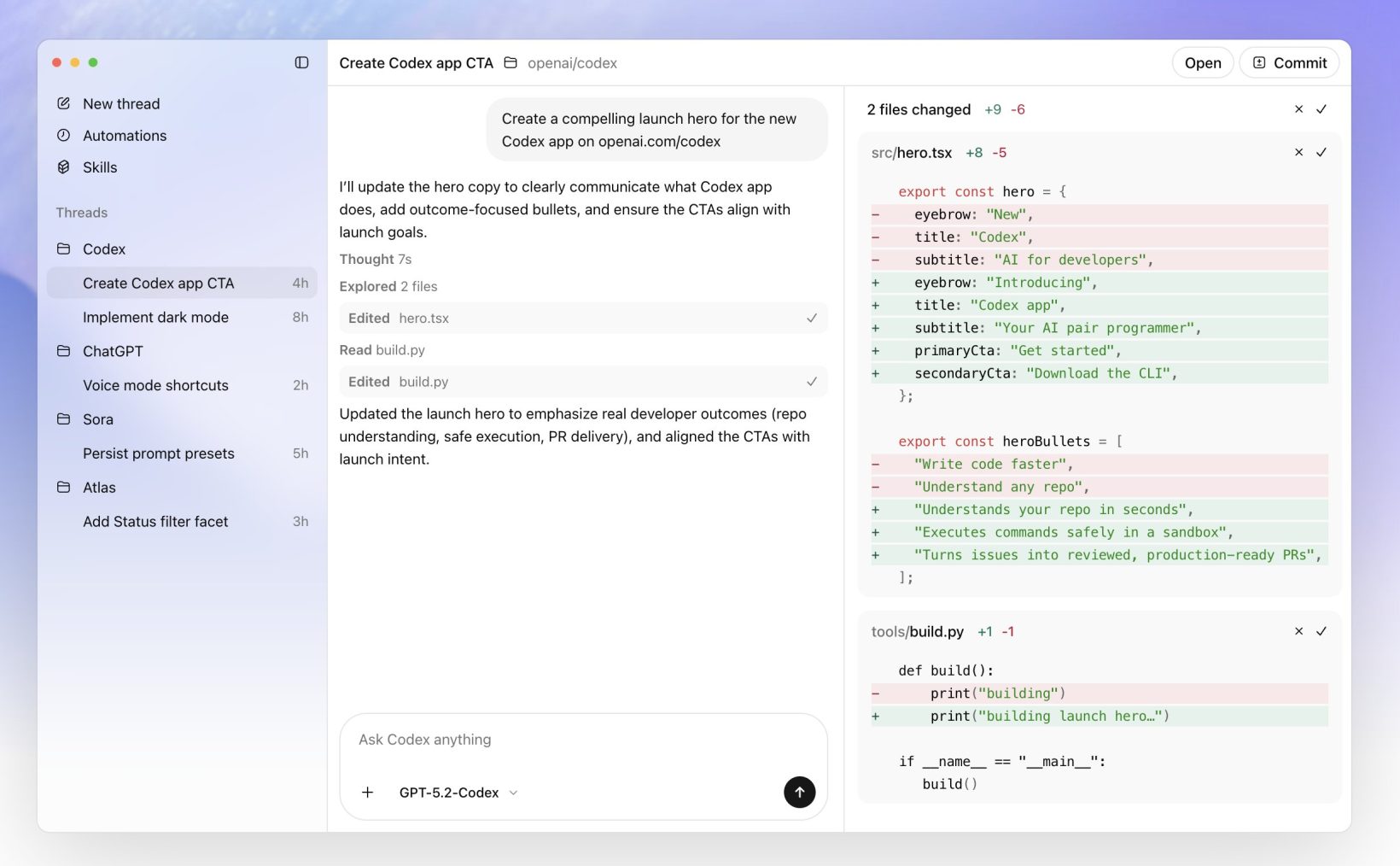
Image: Screenshot shared on Reddit (r/singularity), original post.
There’s even support for what OpenAI calls “skills” and “automations”: reusable workflows that let Codex go beyond raw code generation into things like gathering information, problem solving, carrying out scheduled tasks, or managing routine reviews.
In early internal use cases, Codex has built complete applications, playing the roles of designer, developer, and QA tester in a single string of prompts, an example that hints at what happens when AI stops being an assistant and starts feeling a bit like a team member with infinite coffee.
It’s worth noting that the current release is macOS only, which prompted the usual chorus of developer grumbling about Windows and Linux support. Early adopters on Reddit (and elsewhere) joked that the lack of cross-platform availability feels oddly quaint for an AI tool, even as they praised how much the Codex app can do compared to traditional CLI workflows.
OpenAI is also sweetening the deal: for a limited time, Codex will be accessible to free and Go users, and rate limits for paid Plus, Pro, Business, Enterprise, and Edu plans have been doubled across all surfaces where Codex runs, whether that’s the app, the CLI, IDE extensions, or cloud threads.
The company’s broader strategy here is unmistakable. AI coding assistants are one of the most competitive battlegrounds in generative AI right now, and rivals like Anthropic’s Claude Code have already reported strong revenue metrics in this space.
The launch of a desktop command center for Codex feels like OpenAI saying, “We’re in this to win,” not just to ship features.
So what does this actually mean for developers? It doesn’t mean humans are about to be replaced overnight. Codex is powerful, but like all AI tools, it still makes mistakes and needs human oversight, especially when the stakes are high and production quality matters.
Seen through that lens, the Codex app is less a magic wand and more a powerful collaboration layer, one that could reshape how engineering teams operate without pretending to fully automate the craft of building software.
In practice, that suggests a near future where managing AI agents becomes as normal as managing packages or Git branches. Instead of the terminal being the center of your workflow, Codex and its agents might take that spot, responding to prompts, running scheduled tasks, and even adopting configurable “personalities” that fit how you prefer to work.
At a time when the debate around AI productivity often centers on displacement or disruption, the Codex app points in a more nuanced direction: what happens when coding tools become partners rather than assistants?
The answer won’t be immediate, and the work still demands human judgement, but for many developers the first glimpse of that future arrived today.
Services Marketplace – Listings, Bookings & Reviews