
Think of protein bars as grab-and-go snacks, not meal replacements. They’re most helpful when whole foods aren’t available or when your schedule won’t allow for a proper meal. The most beneficial sources of protein come with fiber, healthy fats, and other nutrients. (That’s why registered dietitians recommend whole foods over ultra-processed alternatives.) So, while high-protein snacks may boast impressive counts on the label, they’re not always the healthiest option.
After consulting the nutrition experts about key ingredients to look for (and what to avoid), we’ve rounded up the best protein bars that meet those standards. For more tips on protein, check out our guide to the Best Protein Powders and How Much Protein Do I Need?
Featured In This Guide
More Sections
What Should I Look For in a Protein Bar?
Start with the Nutrition Facts label. The first thing to check is serving size, since every number on the label applies to that portion. For most protein bars, one bar equals one serving, but it’s still worth confirming.
Scan the Calories
What’s “right” depends on your caloric needs. If it’s a snack between meals, around the 200-calorie range generally makes sense. If you’re trying to gain weight or looking for a meal replacement, you might want something closer to 350 calories. That said, experts don’t recommend protein bars as stand-ins for meals. They’re best used to supplement whole foods, which offer a wider range of nutrients that snack bars just can’t replicate.
Check the Protein Content and Source
“Ideally, we’d like to see protein bars offer 10 to 20 grams of protein,” says Jamie Mok, registered dietitian and spokesperson for the Academy of Nutrition and Dietetics. Just as important as the quantity is the source; protein derived from milk, soy, peas, or nuts are all common, effective options.
Don’t Forget Fiber
Fiber helps stabilize blood sugar, supports digestion, curbs cravings, and keeps you fuller for longer. According to Mok, around 5 grams of fiber per energy bar is a good benchmark, preferably from whole-food ingredients, like nuts, seeds, or oats.
Ingredients to Avoid
In general, the shorter and more recognizable the ingredient list, the better. High-protein bars can be as delicious as a Snickers. “They could also sneakily pack a lot of added sugar, and turn into a candy bar,” says Mok. There’s no official cutoff, but around 5 grams of added sugar or less is a reasonable benchmark. Check both the nutritional label and ingredient list: Syrups and concentrates are usually indicators of added sugars.
Many brands lower their sugar count by using sugar alcohols (like erythritol, maltitol, or sorbitol). These provide fewer calories than sugar and don’t spike blood glucose the same way, but they can cause bloating, gas, or GI discomfort for some people, especially in higher doses. If you notice stomach issues after eating protein bars, sugar alcohols are often the culprit. You might tolerate one bar just fine, but eating several in a day can get uncomfortable.
It’s also worth limiting bars that rely heavily on hydrogenated or partially hydrogenated oils, which are more processed forms of fat, as well as those packed with long lists of artificial sweeteners (i.e., sucralose), colors, or flavors.
Our Favorite Protein Bars
Best Overall
-
Courtesy of Amazon
-
Courtesy of RxBar


RxBar
Protein Bars
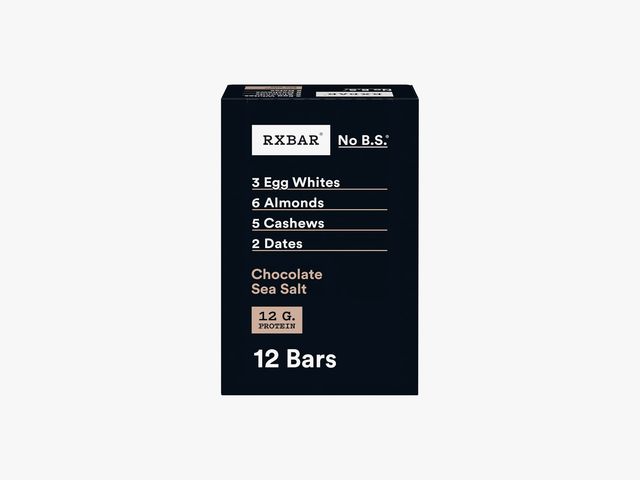
RxBar now offers a couple of different protein bars, but the Classic 12G remains the best. Made from whole foods, the base is a mix of egg whites—a complete protein—dates for sweetness and binding, and nuts (pecans, hazelnuts, cashews, walnuts, peanuts, almonds). I’ve taste-tested the Chocolate Sea Salt, but RxBar also sells Blueberry, Peanut Butter, Peanut Butter Chocolate, Vanilla Almond, Coconut Chocolate, and Strawberry. It has an uber-chewy, sticky texture, so if that’s not your taste, there’s a Nut Butter & Oat Variety Pack that swaps the dates for rolled oats.
Highest Protein Content

Courtesy of Amazon
David
Protein Bar Variety 6-Pack
David’s protein bars are named after Michelangelo’s David, with the implicit promise that this bar will give you a similar physique. This specific bar has been so hyped that it’s hard to not feel like the company has to be a joke; David even sells pocketable cod filets on their site. I bought the Peanut Butter Chocolate Chunk. While it is true that I will eat almost anything that’s peanut-butter-flavored, the Peanut Butter Chocolate Chunk bars are actually good! I find the chewy texture appealing, with chocolate chunks and rice Krispies wound through that are shocking in their verisimilitude, since it also has no added sugars. Actually, it tastes mostly like a peanut butter PowerBar, but with more interesting mix-ins and pretty unbelievable specs. —Adrienne So
Best Gluten-Free
.jpg)
Courtesy of Perfect Bar
Perfect Bar
Variety Pack
As I mentioned before, my kids and I will eat pretty much anything that has peanut butter in it or is made from peanut butter, and that’s basically what a Perfect Bar is. You have to store them in the fridge, which makes them a little less convenient than some of our other picks. It also has more than twice the number of calories of some of our other picks, if that matters to you. However, I’m addicted to these things and buy them from Costco monthly. It just tastes like a little palm-sized bar of peanut butter and honey. As a testament to its flavor, my 8-year-old and 10-year-old will often grab these out of the container if they don’t feel like cutting up an apple. —Adrienne So
FAQs
When’s the Best Time to Eat a Protein Bar?
It depends on your lifestyle. If you’re treating a protein bar as a snack, it makes the most sense between meals, especially if you need something filling to bridge a long gap or prevent a blood sugar crash.
Protein bars are also great post-workout. Of course, a full meal with protein and carbohydrates is ideal for recovery, but a protein bar can be a temporary fix when you’re on the go and can’t sit down to eat right away.
What Are We Testing Next?
Services Marketplace – Listings, Bookings & Reviews