
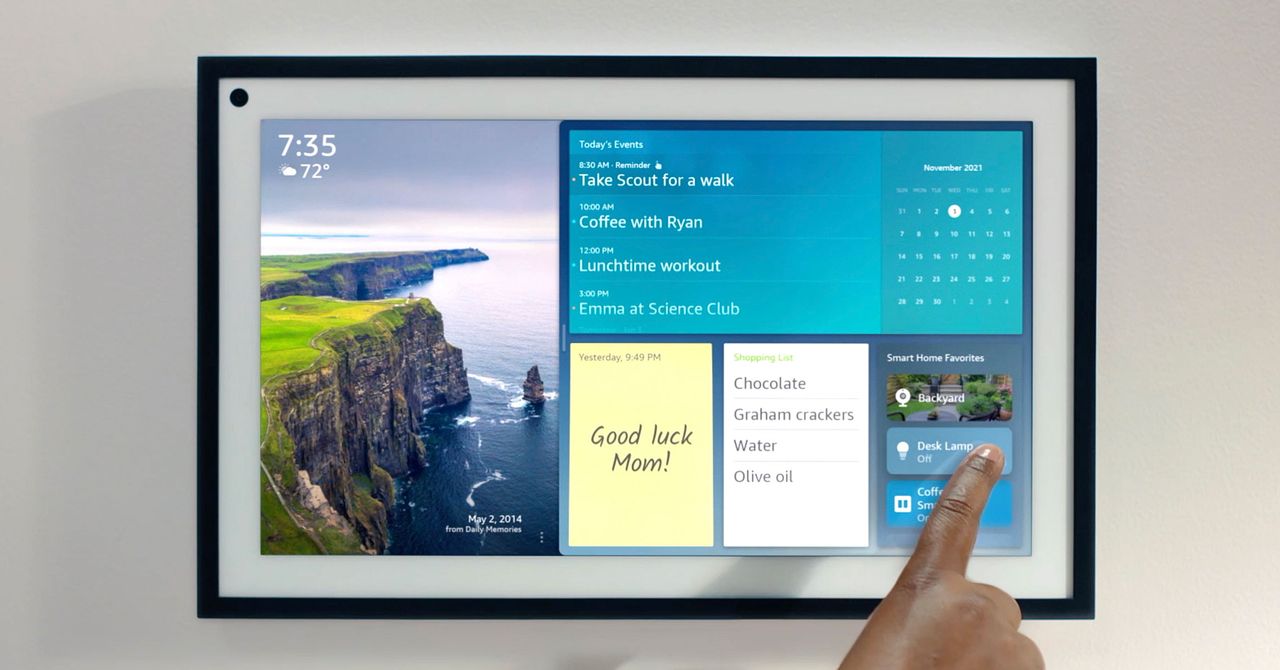

When I first mounted Amazon’s new Echo Show 15 on my kitchen wall, I was enthusiastic about its potential as a hands-free entertainment device. I enjoy listening to music or playing YouTube videos in the background as I’m cooking dinner. So moving that from my phone and onto the wall, with Amazon’s upgraded Alexa+ AI voice assistant that I can prompt hands-free, sounded like a winning combo.
But now, after more than a month with Alexa+ on this 15-inch screen, I’ve concluded that Alexa+ simply doesn’t work well and lacks the basic reliability I need from a smart home device. Yes, it’s still in early access, but it maneuvers like an unpredictable toddler smashing around and half-completing tasks.
The company reworked its well-known voice assistant in 2025, putting generative AI at the core of this new experience. As of earlier this year, Alexa+ is available to all Amazon Prime subscribers in the US. Echo owners are automatically switched over to the new version but can go back by asking to “exit Alexa+.” It’s not clear how long this will remain an option.
Alexa+ is designed to be better at understanding your requests, more personally tuned, and capable of more natural conversational interactions rather than rigid commands. To me, it felt like interacting with a synthetic bridge troll haranguing me until I said the magic combination of words. The AI assistant can be so persnickety that I let out an exasperated sigh at least once during every interaction in my kitchen as I trudged over to the remote or touchscreen in resignation to finish something Alexa+ struggled to accomplish.
Amazon markets Alexa+ as a service that can help automate multiple tasks in your life, like ordering groceries and booking an Uber. I’m not here to order a ride from my voice assistant; I just want some entertaining distractions as I scrub the dishes.
It has become a running gag in my household trying to guess what musician Alexa+ will play on YouTube when requesting a song. A request for some Charli XCX was answered with Sombr’s “Back to Friends.” Instead of The Black Keys, I got Alabama Shakes. When it’s not playing a similar artist, Alexa+ sometimes searches a phrase on YouTube and leaves me to choose a video from the results.
If I meticulously phrase my requests in highly specific ways, then I could occasionally get what I wanted. For example, “Play the song ‘Best Guess’ by artist Lucy Dacus on YouTube” worked as a wordy but successful prompt. But wasn’t the pitch of generative AI that it’s better at knowing my underlying intent? That it should be more of a conversational experience?
Less meticulous prompts to Alexa+ didn’t go as smoothly as the wordy examples. “Play a song by Lucy Dacus” just gave me the YouTube search, “Play a song by Lucy Dacus” verbatim. Bots will be bots. Trying again, I put in another request: “I want to hear a Lucy Dacus song.” This led to a glitch where Alexa+ failed to search for anything and dropped me back to the home screen.
How about some videos? Even though the new seasons of RuPaul’s Drag Race are not as good, I still enjoy watching with friends at the bar on Friday nights. A teaser is always posted on YouTube before the full episode airs. So, I said, “Play the teaser for the upcoming Drag Race episode.” This first attempt was also a bust. Alexa+ claimed this wasn’t a supported action, and it searched for “related content” instead. I tried a few times, switching up the phrasing to finally get through to the clip.
Services Marketplace – Listings, Bookings & Reviews